The Russian school of chess
It was never one way of playing. It was a way of studying — the method behind Botvinnik, Karpov, Kasparov, and the champions who came after them.
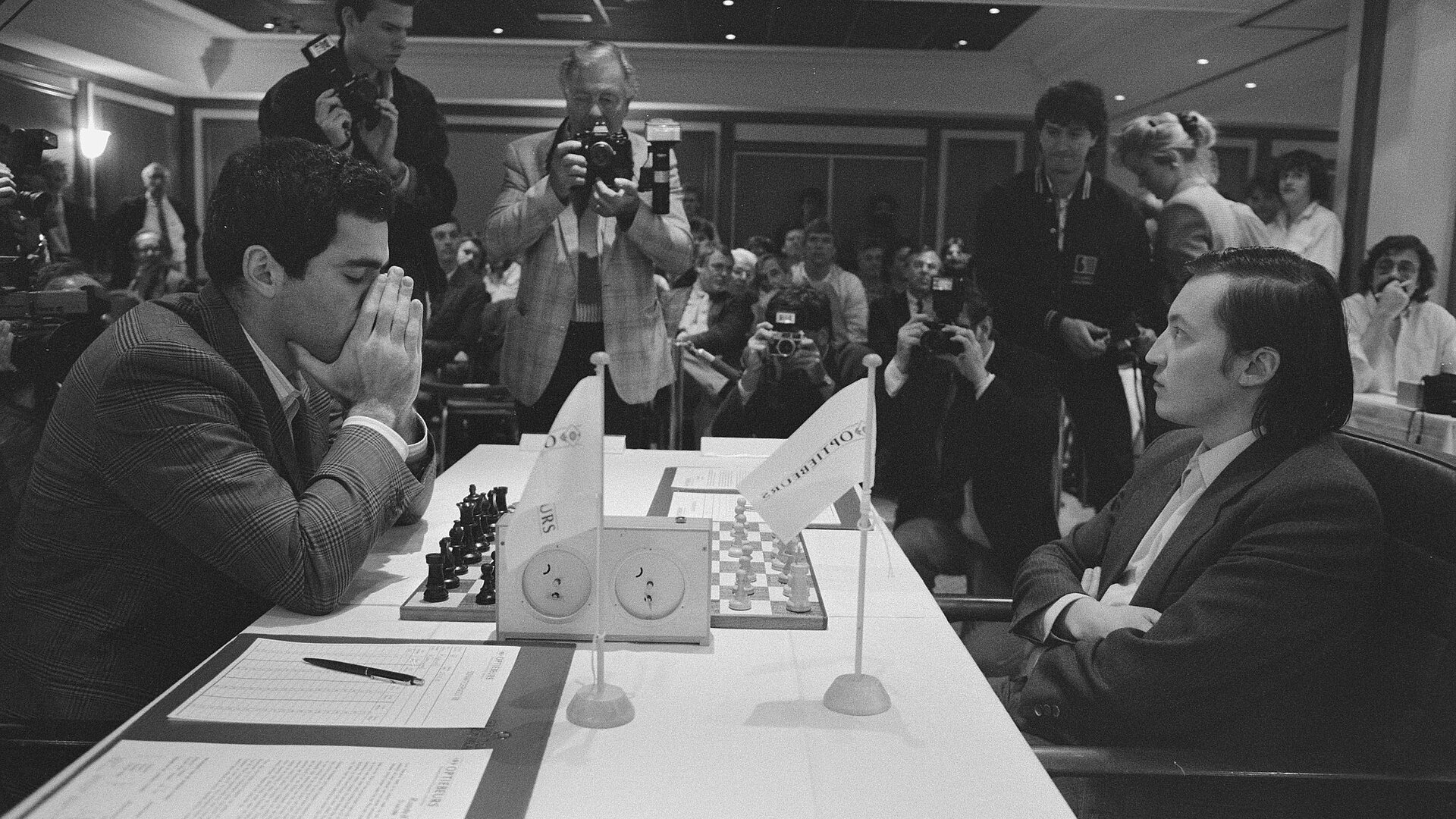
For much of the twentieth century, players trained in the Soviet system sat at the top of world chess. Mikhail Botvinnik, Anatoly Karpov, Garry Kasparov, and Vladimir Kramnik all became world champions. They did not play alike. What they shared was a habit: treat improvement as work you can plan, not as a mood.
What the school actually was
People say “Russian school” and “Soviet school” as if they were the same thing. The second name is the more exact one. The Soviet Union built a coaching system, and the players who came through it covered every style on the board.
Mikhail Tal sacrificed and attacked. Tigran Petrosian spent his energy stopping the opponent’s plan before it started. Karpov squeezed small advantages. Kasparov calculated and prepared. The link was not a favourite opening. It was the expectation that a serious player studies openings, middlegames, endgames, classic games, their own games, and the games of the person they are about to meet.
Botvinnik’s method

Botvinnik sits at the start of that tradition. He was a world champion, and he was also a teacher who thought chess could be prepared the way a scientist prepares an experiment. In 1963 he opened a school inside the Soviet coaching system. Among the students who passed through it were the future world champions Anatoly Karpov, Garry Kasparov, and Vladimir Kramnik.
His opening work was not a list of moves to recite. He wanted the position that follows: which middlegame it produces, what both sides are trying to do, which moment is critical, and which idea has been missed. He also wanted players to look at their own games before blaming a single blunder. That question — what was I thinking here? — still matters more than the first engine line.
Karpov and Kasparov


Karpov made strong play look quiet. A better piece, a pawn that cannot move, a square the opponent no longer controls. None of those wins a game by itself. Kept up for forty moves, they often do. His chess is a warning against calling the Soviet school an “attacking style.”
Kasparov was the other pole: deep calculation, the initiative, and opening files built for a specific opponent. He came out of the Botvinnik school, spoke about that influence, and later worked with younger players himself. The line is easy to see. Botvinnik made preparation a method. Kasparov pushed that method as far as a human could before computers took over the searching.
Their matches are useful for a different reason. Two players from the same culture, both relentless about analysis, and almost nothing in common about how a position should be handled. There is no single Russian style that wins. There is a culture of preparation behind both of them.
Tal, Petrosian, and Kramnik


Tal’s games are full of sacrifices that only work if the calculation is real. Petrosian’s are full of moves that look slow until you notice the attack that never got started. Kramnik took the same analytical habit into a later era, with opening choices and strategic positions worked out to a depth his opponents could not match in the match.
Put the six names in one list — Botvinnik, Tal, Petrosian, Karpov, Kasparov, Kramnik — and the school stops looking like a recipe. It looks like a workshop. The product was a player who could explain the position, not a player who copied one champion’s moves.
How to train this way now
The institutions are gone. The habits are not, and engines make some of them sharper if you use them in the right order.
- Analyse your own game first. Ask why you chose the move, what you calculated, and when your judgment went wrong. Then look at the engine.
- Study master games actively. Stop before Karpov’s or Kasparov’s move and decide what you would play.
- Learn the position, not the line. An opening is a structure, a plan, and a typical ending.
- Calculate on purpose. Take a messy position, hide the next moves, and work out two or three candidates before you touch a piece.
- Repeat the work. One long session and a week of nothing is not a system. Calculation, tactics, endings, openings, and your own games belong in the same week.
A database will not tell you which of those five you are skipping. A master who looks at your games will. That is the part of the old school that a video cannot replace: someone who has already done this work, and who can see the mistake you keep describing as bad luck.
Chess with Masters is built for that. You can book a titled coach, bring the games you do not understand, and turn the Botvinnik habit — study, then check — into a plan for your own rating, not a history lesson.
Study with a master, not only a database
Chess with Masters connects you with titled coaches who can turn these training habits into work on your own games.
Browse masters and book a trial lesson →Are you a titled coach? Get featured and start receiving students →